



 ello
and welcome! This is the second website I've launched that was motivated by the campaign to help my
son Joseph overcome his disability. The first, kidsbright.org, was active for about four years beginning
in 1999. Portions of it are still in
ello
and welcome! This is the second website I've launched that was motivated by the campaign to help my
son Joseph overcome his disability. The first, kidsbright.org, was active for about four years beginning
in 1999. Portions of it are still in Let There Be No More “Afflictalogues”
Afflictalogue is a brand-new word. You saw it here first. But the thing it refers to is probably familiar.
During the summer of 2013, I participated in a small study group through the church I attended in those days. The group was methodically working through a book titled Who Do You Think You Are? Finding Your True Identity in Christ, by Mark Driscoll.
I’m striving to keep this post short, because once started on a topic I can go on past the limit of anyone’s patience (or at least of my own patience, when rereading it). About that book I’ll just say its chapters explore various facets of a believer’s identity that, stitched together, perhaps constitute a whole Christian. Thus, for example, Driscoll declares at different points “I Am Blessed” and “I Am Forgiven” but also, significantly, “I Am Afflicted.” Because being saved does not mean one’s problems go away.
Worse, to quote Driscoll, “it’s often difficult for us to believe in God’s goodness and sovereignty when we suffer.” Driscoll has something useful to say about that, but in 2013 I was not ready for it.
Twenty years earlier, i.e., in the early 90s, I was caught up in a movement that greatly emphasized the practice of spiritual gifts, especially healing (based for example on 1 Corinthians 12). That’s covered in the latter part of my memoir, What About the Boy?
As put into practice, it was pure foolishness, at least for the throngs of eager souls who filled up places like the Anaheim Convention Center to hear about it. The message was that with the power of the Holy Spirit successful Christians overcame their problems.
I learned there to confront trouble confidently and defiantly in the name of God, just as David had confronted Goliath. We were empowered to do so! Only, in retrospect, it seemed that in my battle Goliath had won. I waded into it as the married father of a disabled son, and I came out a widower whose son was still disabled. I had not lost my faith; I was still attending churches, hoping for understanding. But in reading Driscoll’s book I identified most closely with the concept of being afflicted.

Even though, to be fair, other aspects of my life were by 2013 very much to my liking. (I had remarried, now had two healthy kids, liked my job, etc.)
It so happened that when the study group hit that chapter the leader called upon me to expand on my experience of affliction. And so I did! I said affliction never surprised me, and that I tried to be grateful for every outcome that was not a disaster, but that it was a struggle to understand how suffering and unanswered prayer could be part of God’s plan. In summarizing what had happened in my family, I conceded that God works in mysterious ways, and said the only available response was humility and acceptance.
Not good enough!
An assistant pastor sitting in on that meeting rebuked me very sternly, perhaps angrily. No Christian, he said, has any business feeling afflicted. Inconvenience and failure are part of life. God permits such things because they elevate our dependence on Him, but unfortunately some people (meaning me) respond by elevating the problem instead.
To be clear, gratitude for salvation and all our other blessings should far outweigh anything else. Writing about this today, I readily acknowledge these blessings, including availability of His Word and a direct line of communication. But such things were not uppermost in my mind back then.
Okay, that occurred 13 years ago. It’s still rather fresh in my memory. I didn’t mind the pastor’s criticism too much. No, to be honest it hurt me, annoyed me, infuriated me. Given that it was my son who bore the brunt of the affliction (note the above title of my book), a lesson for me—who only wanted help for him—seemed almost beside the point.
That son died in 2018, so he’s out of the picture. That doesn’t help me to feel good about the blighted life he had, because I don’t.
And so, I still have issues.
These days I participate in a weekly men’s group that reads and discusses the Bible, especially focusing on the New Testament epistles. There are passages in which Paul refers to his earlier days as “chief” of sinners, as well as his many ordeals and the persistent “thorn in the flesh” still troubling him. He does so sparingly, not wanting to be the focus of his own writings, but his references prompted one of our guys, who’s in AA, to mention a word that was new to me: drunkalogue (presumably derived from monologue). Apparently, a drunkalogue is a recital of one’s prior missteps that goes into too much detail, that seems almost to relish the depths to which one had sunk.
Now, although I’ve never had a problem with alcohol, this resonated. Hate to say it, but that pastor was onto something back in 2013. I certainly have elevated the heartbreak of those now long-ago days. I dwelt on it to the extent that for years it practically defined me.
Driscoll wraps up his chapter saying that affliction gives one “a unique credibility to speak about difficult subjects in a way that helps bring healing and life to others.” I still have a ways to go. When I meet people and they learn that I once wrote a book, I don’t necessarily encourage them to read it. The story’s true, but it’s a cautionary tale at best. I still have a hard time talking about that part of my life when sharing my testimony with other believers. I know the Lord does not like complainers (see for example Numbers 14:27), and it’s too easy to sound like I’m complaining, or questioning His wisdom.
Well, Sweet Are the Uses of Adversity, according to Shakespeare. Thus, to borrow a metaphor from my great friend Bob Connolly, every mishap along the way, if it humbles us to the point of accepting reality, is just one more click as the great fisherman slowly reels us in.
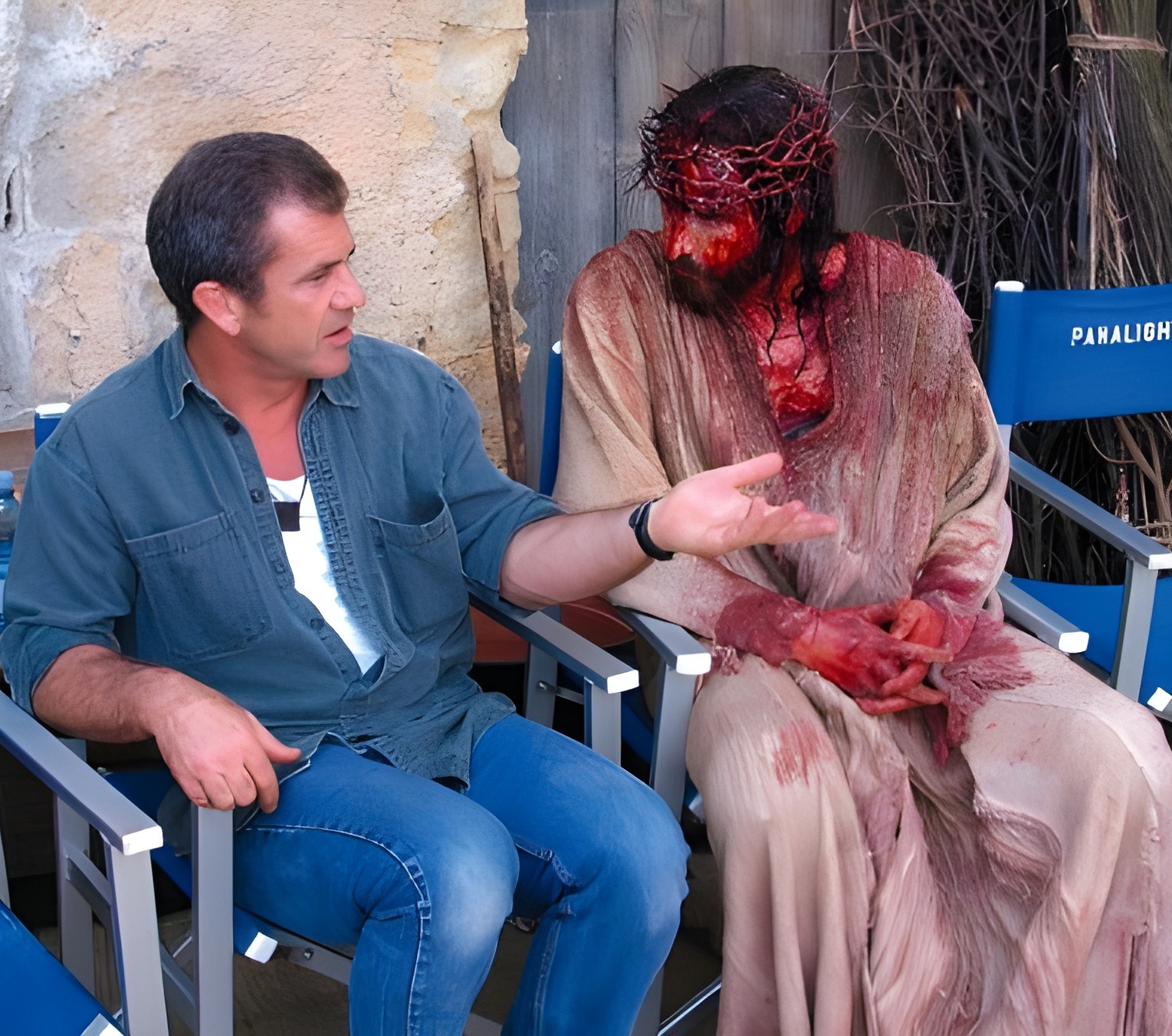
Here I am telling Jesus about my problems.







 William Ketchum is a rocket scientist who has been retired since the early 90s. During his career he was involved in developing the Atlas rocket, first conceived as a weapon for potential use against the Soviets and later repurposed for America’s first manned space launches. He talks briefly about some of the engineering challenges he dealt with, and includes short profiles of people he’s known (including Buzz Aldrin). He talks about growing up in California during WWII, about the effect of the war on his father, and how living in that environment led to his career choice. After retiring, he did a lot of traveling, e.g., to Pacific islands where his father had been stationed. He also delves into family history and describes the discovery of ancestors who fought on both sides of the Civil War. There’s a section of “weird” stuff he’s witnessed over the years, and miscellaneous speculations.
 Although having a disabled child meant total and absolute upheaval of life in our household, there are many variables. Another family’s experience is likely to be different.


 Yesterday, following a typical morning round of errands, I found myself back at home relaxing in my favorite chair when my adult son Joseph approached with a request.